
Our history
A house for guests since 1927.
Almost 100 years, four generations and countless stories: these are the moments that made the Trinserhof what it is today.
Ice Age
The Trins moraine
Around 15,400 years ago, a glacier pushes up a large end moraine near Trins. It is so characteristic that geologists named a whole phase of the late Ice Age after the valley: the Gschnitz stadial.
1077
Trunnis
Around 1077/80, Trins is first mentioned in writing as “Trunnis”, in a record of Scheyern Abbey. The name probably goes back to the nearby Truna meadows.
13th c.
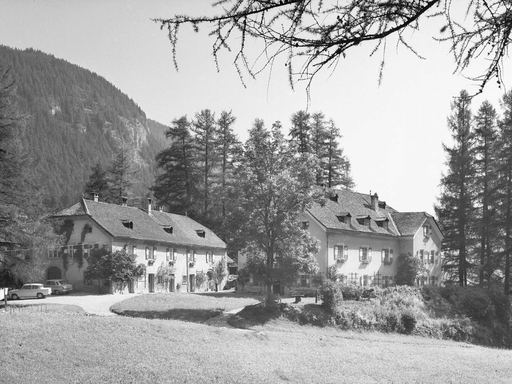
Schloss Schneeberg
A castle in Trins is mentioned as early as the 13th century. Its defensive tower and part of the wall survive; today’s Schloss Schneeberg dates mostly from the 18th century.
1307
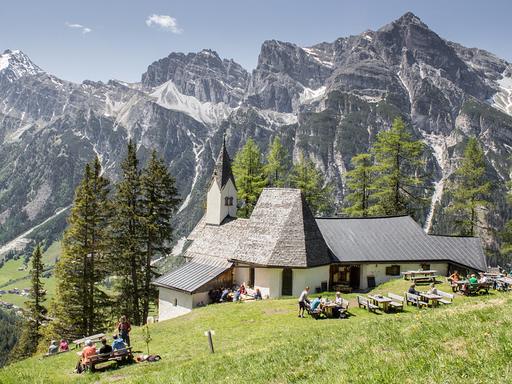
St. Magdalena
The little mountain church of St. Magdalena, high above the Gschnitztal, is first mentioned in writing.
1359
The parish church
The parish church of St George in Trins is first mentioned in writing. Its late Gothic building still shapes the village today.
16th c.
Mining in the valley
Ore has been mined here since pre-Roman times; mining reaches its peak in the 16th and 17th centuries. When the mines close in the 17th century, farming takes centre stage.
1772
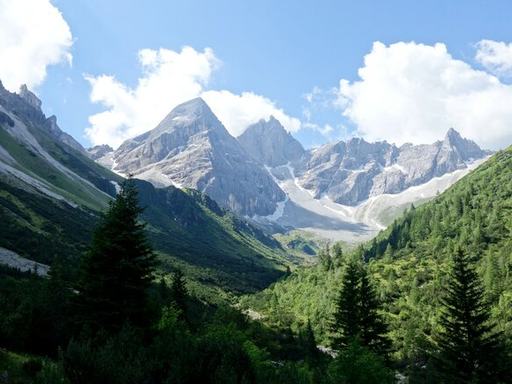
Up the Tribulaun
As early as 1772, a mountain guide called Pittracher is said to have led guests up the Gschnitzer Tribulaun – there is no written record, but the story is still told today.
1811
A municipality of its own
Trins becomes an independent municipality.
1867
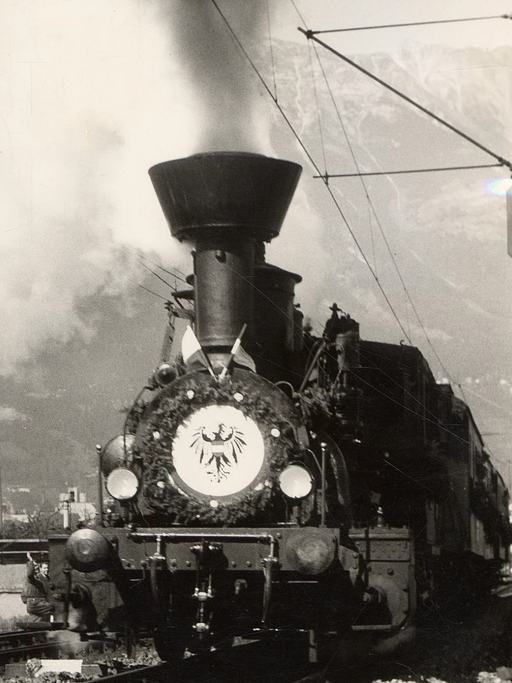
The Brenner railway
The Brenner railway opens and brings the first tourists to the Gschnitztal: they get off at Steinach and continue on foot or by horse-drawn carriage.
1872
Georg Pittracher
Georg Pittracher from Gschnitz, one of Tyrol’s first authorised mountain guides, and Heinrich Waitzenbauer from Munich are the first to stand on the eastern summit of the Pflerscher Tribulaun.
1897
The Bremer Hütte
The Bremen section of the Alpine Club builds the Bremer Hütte high above the head of the valley – still a goal for mountaineers today.
1920s
Summer retreats
In the 1920s, more and more summer visitors discover the Gschnitztal – the time is ripe for a hotel in Trins.
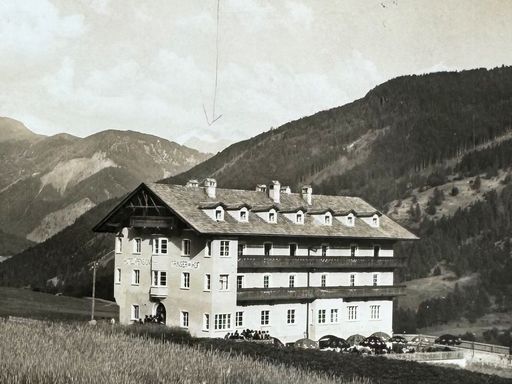
1927
The beginning
At just 24, Lambert Volderauer lays the foundation for the Trinserhof.
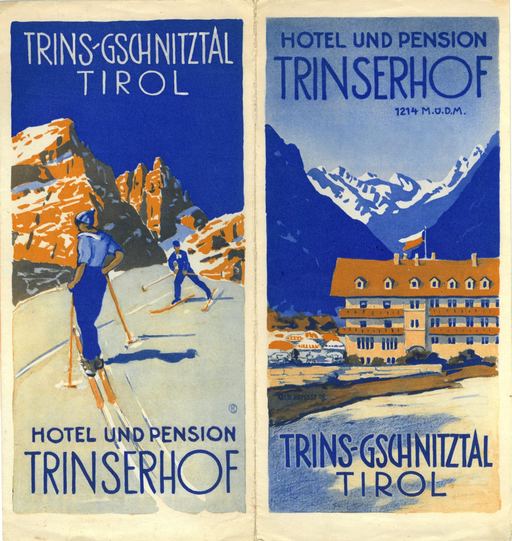
1929
The 1929 brochure
The “Hotel und Pension Trinserhof” invites guests with a brochure of its own, designed by the Innsbruck graphic artist Oswald Hengst. A copy is kept today by the MAK in Vienna.
1930
Pig sty and butcher
In the early years a pig sty stands where the terrace will later be built, and there is a butcher’s shop in the cellar.
1933
The Thousand-Mark Ban
Germany demands 1,000 Reichsmark from anyone travelling to Austria – the fee is only lifted in 1936. They are difficult years for Tyrolean tourism.
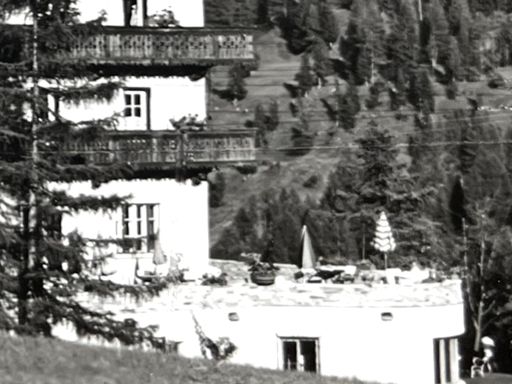
1935
The terrace
The house gets its terrace with the wide view of the mountains.
1938
The Anschluss
Austria is annexed by the German Reich – an unsettled time begins in Tyrol, too.
1939
The Option
South Tyrol has to decide: emigrate to the German Reich or stay in Italy. A time of departures begins for many families. At the same time, the Second World War begins.
1941
Jakob Covi takes over the Trinserhof
Jakob Covi, who had previously run hotels on the Mendel, in Merano and in St. Konstantin am Schlern, buys the Trinserhof. When Mussolini suggested in 1942 that anyone who liked speaking German should leave over the Brenner as soon as possible, he left South Tyrol too. Three hotels were on offer: one in Zakopane in Poland, one in the Ötztal – and the Trinserhof.
1945
The end of the war
The war is over, and Tyrol now belongs to the French occupation zone.
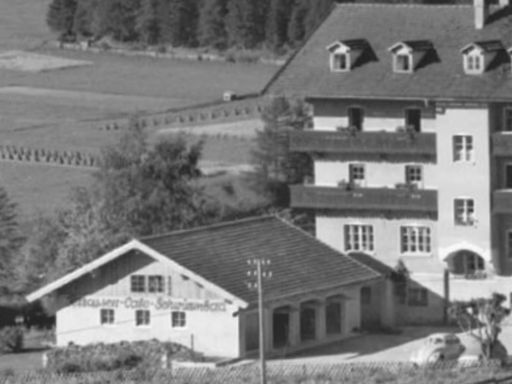
1950
The second house
A second building is built next to the main house – with an indoor pool.
1951
The avalanche winter
In the winter of 1950/51, devastating avalanches hit the Alps – Tyrol is badly affected, too.
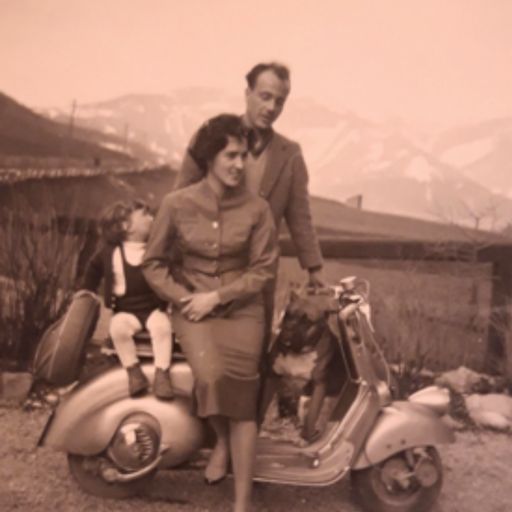
1952
A growing family
Margit, née Ebster, and Harald Covi are the next generation at the Trinserhof. They have five sons: first Jörg, then Andreas, Harry, Florian and Christian. Jörg and Harry stay close to the house and work in the hotel, while their brothers go their own professional ways. Margit’s father, Fritz Ebster, was a well-known cartographer and painter; many of his paintings still hang in the house, and one room is dedicated to him.
1955
Austria is free
The State Treaty ends the occupation. The country flourishes, and more and more guests discover the mountains.
1957/58
The first ski tow in the Gschnitztal
In the winter of 1957/58, the first ski tow in the Gschnitztal starts running near the Hotel Gschnitzerhof.
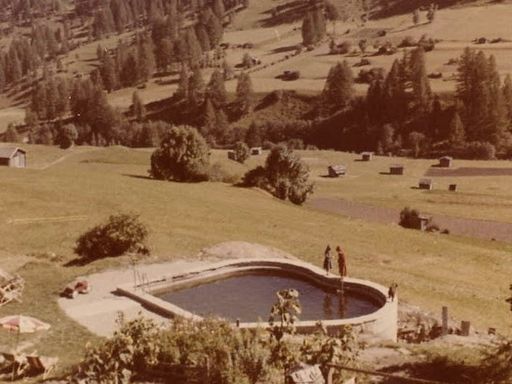
1958
The outdoor pool
The outdoor pool is built in the garden – to this day a lovely spot for hot summer days.
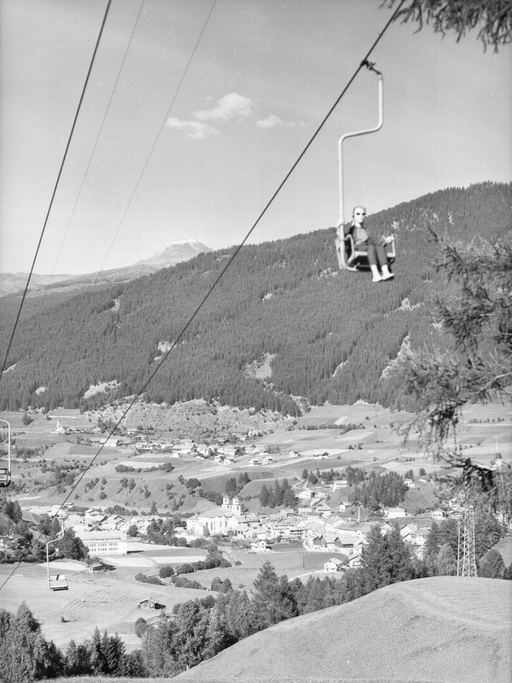
1960
The chairlift to the Bergeralm
Near Steinach am Brenner, a chairlift takes skiers up to the Bergeralm, at about 1,594 metres – the original lift of today’s ski area.
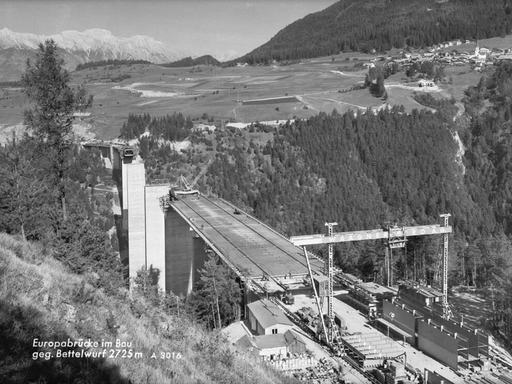
1963
The Europabrücke
The Europabrücke on the Brenner route opens – Tyrol moves closer for travellers from all over Europe.
1964
Olympics 1964
The Winter Olympics take place in Innsbruck for the first time, not far from the Gschnitztal.
1969
A film in Trins
A whole 17th-century village is built in the Gschnitztal for the film “The Last Valley”, starring Michael Caine and Omar Sharif. Filming starts in August, and the actors come and go at the Trinserhof as well.
1970
The second house grows
The second building is extended and offers more room.
1971
Premiere in Innsbruck
“The Last Valley” premieres at the Metropol cinema in Innsbruck – with images from our valley.
1976
The Olympics in Innsbruck
Jörg Covi works at the Winter Olympics in Innsbruck – and meets his future wife, Dana, there.
1978
The Hochsonnlift
The Hochsonnlift opens up higher slopes on the eastern side of the Nösslachjoch and extends the Bergeralm ski area upwards.
1980
The bar
The bar is built in the house – to this day a cosy place to meet in the evening.
1985
The twins
Jörg and Dana Covi have twin daughters, Jennifer and Jessica – Jenn and Jess.
1995
Austria joins the EU
Austria joins the European Union.
1998
An open border at the Brenner
Border checks between Austria and Italy at the Brenner come to an end.
1999
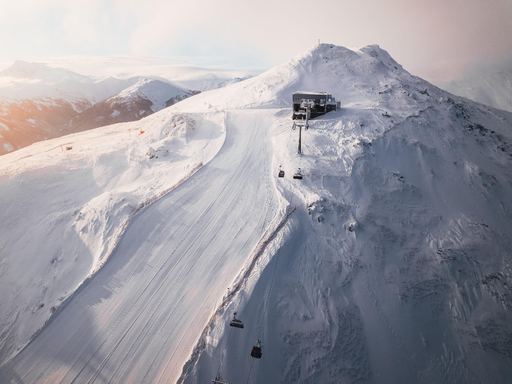
The Hoher Turm
A double chairlift leads up to the Hoher Turm, the highest point of the ski area.
2002
The euro
The euro replaces the schilling.
2010
A distinguished guest
Over the turn of the year, Germany’s interior minister Thomas de Maizière spends the holidays at the Trinserhof with his family – and goes skiing almost every day.
2011
Holidays for deaf guests
The Trins tourism association, where Jörg Covi is head of the local office, develops a holiday package with a sign language interpreter together with the Tyrolean association of deaf societies. It grows into the “Rendezvous with the Deaf”, which takes place for the seventh time in 2017.
2011
Via Culinaria
The Trins tourism association, chaired by Jörg Covi, invites visitors to the Via Culinaria: a 3.6-kilometre food trail with eight stations offering regional specialities.
2013
Jörg and Harry take over
After the passing of Harald Covi, his sons Jörg and Harry take over the hotel completely.
2016
A journey through time
Jörg Covi and his daughter Jess capture the history of the house in a book: “Der Trinserhof – Eine Zeitreise”.
2019
Bergsteigerdorf Gschnitztal
On 5 May 2019, Trins and the Gschnitztal officially join the Bergsteigerdörfer (“Mountaineering Villages”), an initiative of the Austrian Alpine Club launched in 2008. Its guiding framework is the Alpine Convention, which promotes sustainable development and the protection of the Alps: tourism should be an asset for small mountain communities, without turning them into mass-tourism resorts. Instead of competing with major ski areas such as the Stubai Glacier through ever larger lifts and pistes, the valley builds on its quieter qualities: hiking, mountain huts, ski touring, cross-country skiing, traditional villages and largely unspoilt scenery.
2020
The Covid pandemic
The pandemic changes travel: hotels in Austria stay closed for months.
2022
The fourth generation
Jenn Covi moves into the Trinserhof. Soon afterwards she and her sister Jess run the hotel together with Dana and Harry – hand in hand, as a family.
2026
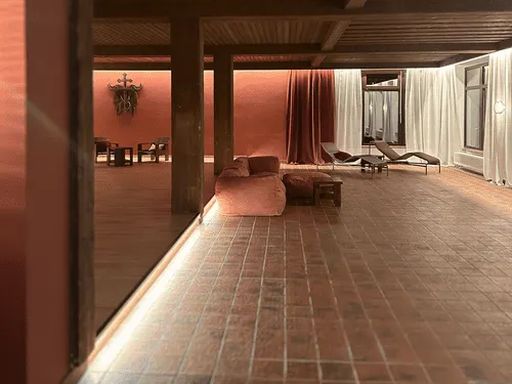
The garden house
The garden house is created inside the existing annex building: a place to rest and enjoy the views of the mountains, connected to the garden and the outdoor pool – and to the new sauna.
2027
100 years of the Trinserhof
The Trinserhof celebrates its 100th birthday – and we look forward to celebrating it with our guests.


